Allan Andersen
1. Congratulations on winning in the Global Photography Awards! Can you share a little about yourself, what inspired you to pursue photography, and how has your journey evolved since your first shot?
Yes, I live in Denmark, near Mariager Fjord by the Kattegat coast – an area that is also the main subject of my photography. I take pictures because it brings me peace of mind and gives me meaningful time alone. I have always been interested in photography, but I only started taking it more seriously about two years ago. Since then, my journey has developed quite rapidly. In the beginning, I photographed everything – in all kinds of light and with many different lenses. The biggest development for me has been reaching the point where I now know which images I want to create, and what it requires, especially in terms of light, but also wind and weather.
2. Can you share the story or inspiration behind your award-winning piece? How does winning this award make you feel about your journey in photography?
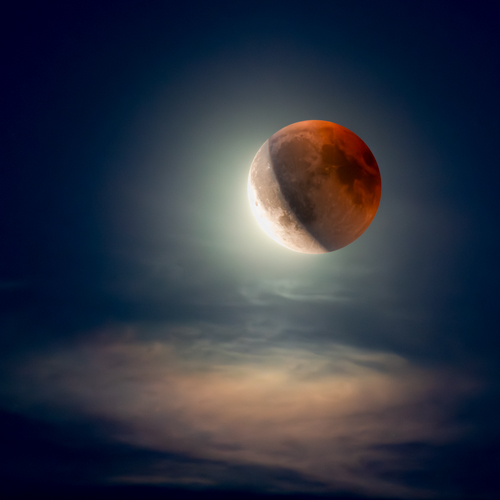
I had planned to photograph the lunar eclipse this September from the hill by the church in Als. From there, you rise a little above sea level, which usually gives a beautiful view of the blood moon. Unfortunately, it was a very windy evening and the clouds were lying low on the horizon over the sea. For a long time, the moon was completely hidden; the full eclipse had already passed, and everyone else who had come out to watch it had gone home. But in the end, the moon appeared above the clouds, and luckily, part of it was still red from the eclipse. I got my photos, and of course, I am very happy that I stayed and captured them. What I think this shows is that, as a photographer, you sometimes need to improvise when the conditions are not as expected – to adapt to the circumstances. And sometimes, that can result in the most interesting images.
3. How do you decide which photo to submit for a competition?
I naturally choose the ones I like the most myself, but I also use the opinions of others to evaluate whether my photo resonates with other people. It is always my own judgment that I value the highest, the images I personally like the most and can look at many times without getting tired of them. I also think a lot about whether a photo is technically good enough before I submit it to a competition. I also consider which category it will fit best in.
4. What first made you pick up a camera?
Quite simply, I wanted to. The fascination of being able to freeze a moment in that way.
5. What’s your favorite type of photography, and why do you love it?
I appreciate photographs that contain two things. First, it must be clear what the idea behind the photo is, whether it is a subject, a scene, or a mood. It is not so important what the photo shows precisely, as long as the thought behind it is clear. Second, the light must also work; it must be interesting. I like this because such a photo says something about the person who took it; there is always an intent behind it, and therefore also a personality.
6. What’s your go-to camera setup, and why does it work best for your projects? What’s your favorite feature?
I do not have a definitive answer to that, as it depends on what I want to photograph on a given day. I use a Nikon D850, which fully covers all my needs. In addition, I work with prime lenses, which I choose before I leave. My winning photo was taken with a 500mm F4 lens, but I just as often choose among my other lenses, from 15 to 300mm. The most important thing for me in my choice of lenses is their personality. A clinically sharp and neutral lens does not interest me very much. But lenses that move towards a film look in color and the handling of highlights are the ones I love to use.
7. If someone looked at your work, what’s the one thing you’d want them to feel?
I try to create photographs that balance between calm and beauty, but where the subjects still give rise to a little curiosity and reflection. The quiet story and a moment of peace are what I hope to convey with my photos. The feeling it gives us to be in nature without stress and rush.
8. What was the most challenging part of capturing your winning shot?
Definitely the wind that shook my camera. Especially a challenge because I was using a 500mm lens. In addition, the exposure of the clouds and the moon had to be balanced so that the moon was not overexposed and the colors in the clouds came out correctly.
9. Is there a specific place or subject that inspires you the most?
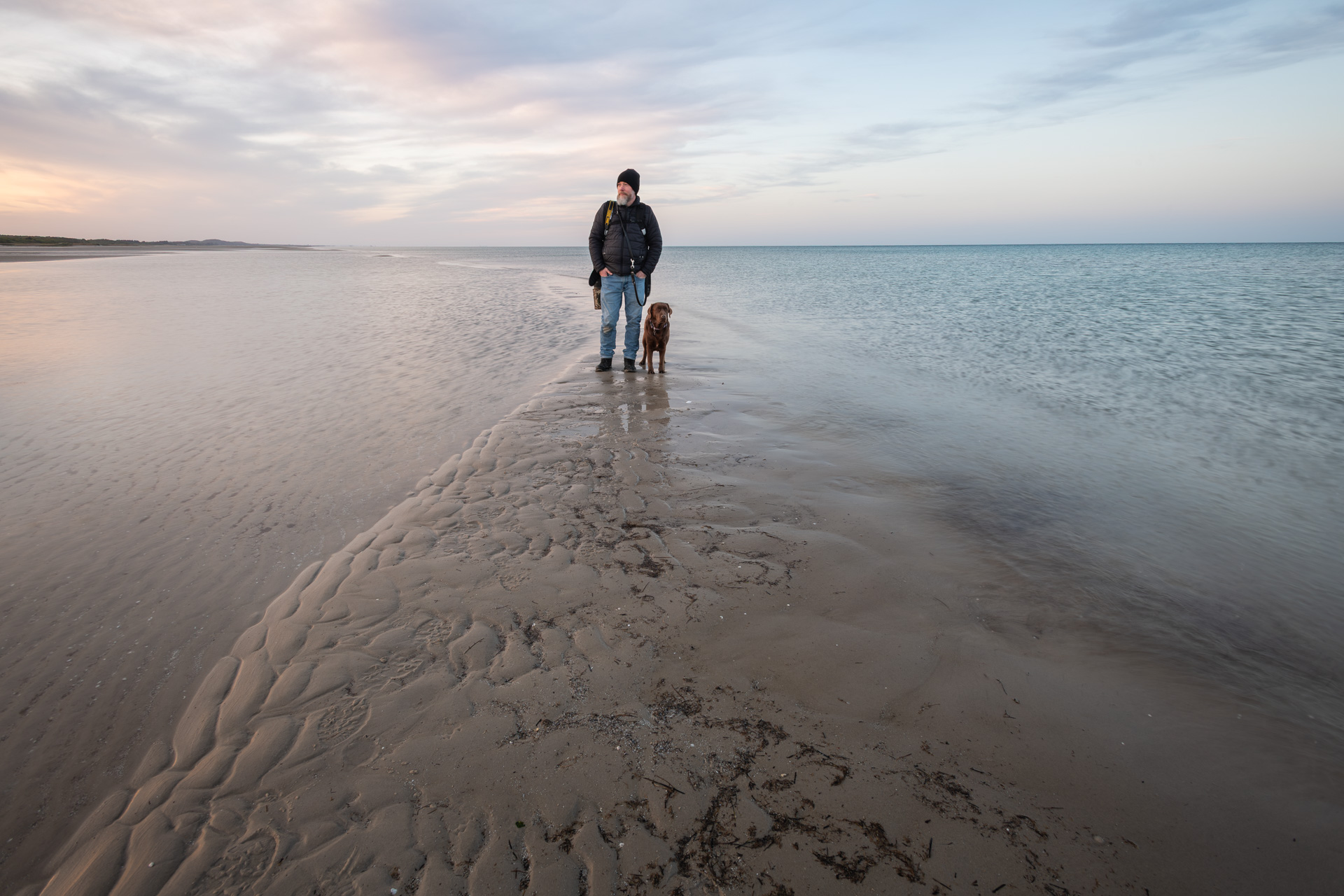
There is no doubt that I have a special love for the sea and Mariager Fjord. Especially the small place at the end of the fjord called Als Odde. The light there is often quite magical, as it is surrounded by the fjord on one side and the Kattegat on the other. The water is also quite shallow, so on completely calm days, everything becomes like a mirror reflecting the sunlight and the clouds. There are also both wildlife and man-made objects that can form subjects in my photos of the light.
10. Who or what has been your biggest influence in photography?
The first photo I saw, at the beginning of my period with a more serious interest in photography, which inspired me a lot, was a classic Ansel Adams photo. The way he made a subject come alive and his work with light and shadows fascinated me very much. But the greatest influence on my own photos comes without a doubt from Michael Freeman’s book The Photographer’s Eye. The way he teaches in that book gave my creativity the tools and the inspiration I needed to develop my way of seeing the world.
11. What message would you share to inspire photographers to participate in photography awards, and what advice would you give to help them excel in the competition?
I would advise others to wait a little before entering competitions until they have developed their own style. That way, it can grow without being shaped by what others might think. Self-criticism is also appropriate before submitting to a competition. You could ask yourself questions such as, "Would I vote for this photo myself?". It is also important to find competitions that value the kind of photos you create. Looking at the winners from previous years can give an idea of what different competitions reward.
12. What’s one piece of advice for someone just starting in photography?
Quite simply, before you take a photo, think about what you feel is most important to bring out, and then use all the tools you have to try to achieve it. Shoot with intent, and then take photos in that way as often as you can.
13. What role do editing and post-processing play in your creative workflow?
It varies. I always shoot in RAW and try to avoid overexposing my photos. That way, I have the best possible raw material to work with. Sometimes it requires selective masks to bring focus to the most important areas of my photos. Other times, the light needs to be shaped a little so it flows more evenly across the image. In general, I do not change color bands much, as I really appreciate a natural look. But to achieve that natural look, it sometimes requires more work for the photo to appear as I experienced it when I took it. I see it as another layer in the creative process of making a photograph, but I find that I edit my photos less now than I did, for example, a year ago.
14. How do you see technology, like AI, influencing the future of photography and your own approach?
It is a big topic. For me, it will not mean very much, as a large part of the joy of photography is connected to the experiences in nature that it gives me. AI can never replace that. When it comes to editing, it is a powerful tool for selecting subjects with masks and for removing small unwanted objects. In that way, AI tools make my editing workflow somewhat faster and also more precise.
15. If you could photograph anything or anyone in the world, what would it be?
Wonderful question. My answer would probably be everything. That would take an eternity, so if I have to prioritize, it must be places with fantastic light, such as the far north of Norway. Iceland and New Zealand also rank high. Snowdonia in Wales is definitely on my bucket list as well. I also have a dream of trying street photography, and Palermo is the place I would like to return to for that. To be honest, I think it will be difficult to choose.