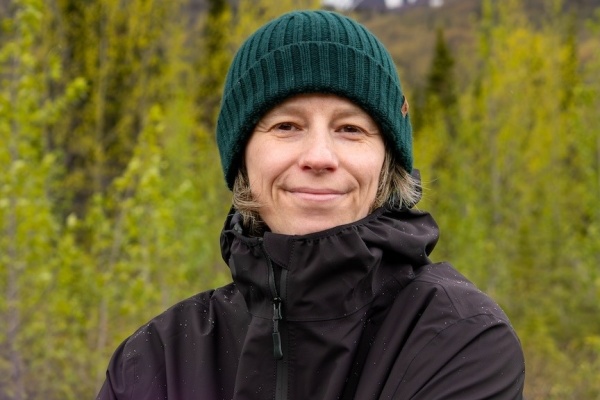
Ariane Totzke
1. Congratulations on winning in the Global Photography Awards! Can you share a little about yourself, what inspired you to pursue photography, and how has your journey evolved since your first shot?
Thank you so much! Photography, for me, has always been about capturing transience – those fleeting instants that vanish in the flow of time. Sometimes it’s a subtle expression on an animal’s face that reveals curiosity or joy, and sometimes it’s the way the Alps transform minute by minute under the shifting colors of the setting sun. These moments are often imperceptible to the naked eye, yet photography allows me to preserve them and later discover the small stories they hold. Over the years, my work has evolved from capturing fleeting wildlife expressions and alpine landscapes to broader artistic projects such as Beyond the Jungle, which reflects on our relationship with the Swiss primeval forest. International recognition, including an exhibition at the World Photo Carnival in Kolkata and an award at the Luxembourg Art Prize, has been both humbling and inspiring. It motivates me to continue exploring the intersection of nature, light, and emotion – and to share those quiet yet powerful moments with others.
2. Can you share the story or inspiration behind your award-winning piece? How does winning this award make you feel about your journey in photography?
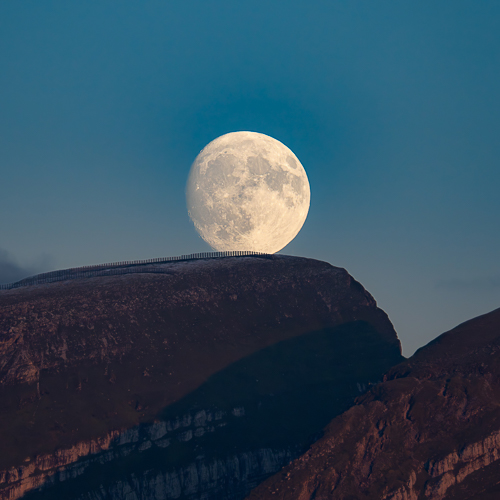
The Resting Moon is a very special photograph for me. It captures one of those rare natural wonders that last only a few fleeting minutes. Shortly before this year’s blood full moon, the moon appeared to rest directly on the ridge of the famous Churfirsten mountains in Switzerland. It was a unique constellation that could only happen at that precise moment. There was no way to plan such a scene – it was pure coincidence that I happened to be there at exactly the right time. That is what I love about nature photography: it cannot be scripted. It demands patience, presence, and sometimes a bit of luck. Winning this award feels like a recognition not only of that single image, but of my whole journey – of being attentive to the unplanned, fleeting moments in nature, and of transforming them into something lasting to share with others.
3. How do you decide which photo to submit for a competition?
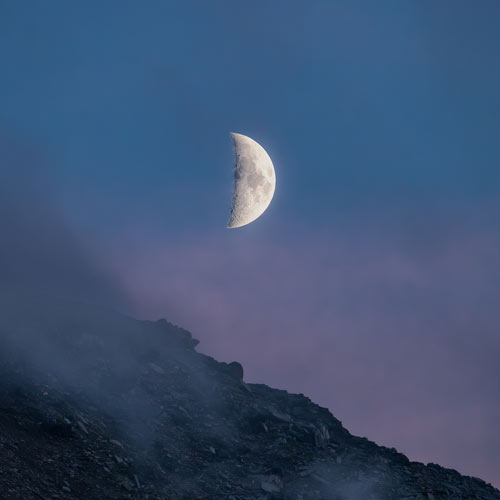
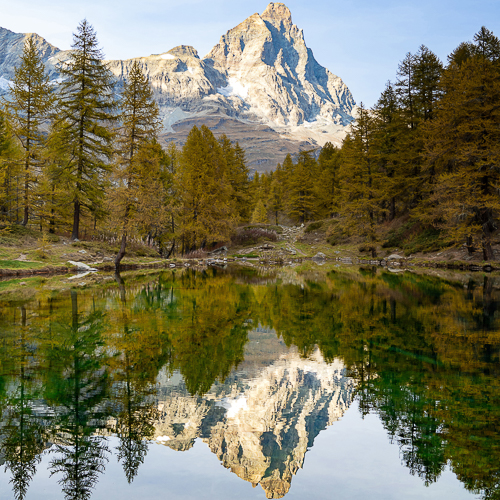
When choosing images for competitions, I look for photographs that not only have a strong visual impact but also capture those rare, unrepeatable moments in nature. Often, they are the result of coincidence rather than planning. While The Resting Moon was one such fleeting constellation, my second winning image – which received the Gold Award – was also pure serendipity. On the hidden side of the Matterhorn, I arrived just as a small alpine lake mirrored the iconic peak with perfect clarity. It is moments like these that guide my choice: photographs where beauty, chance, and emotion converge to tell a story beyond what is visible.
4. What first made you pick up a camera?
I was 14 when I discovered my father’s old analog SLR camera in the attic. He let me keep it, and from that moment on, I was captivated. That camera opened up a new way of seeing the world, and I haven’t put cameras down since.
5. What’s your favorite type of photography, and why do you love it?
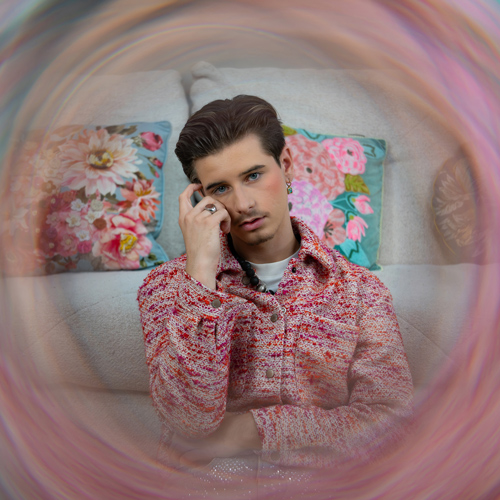
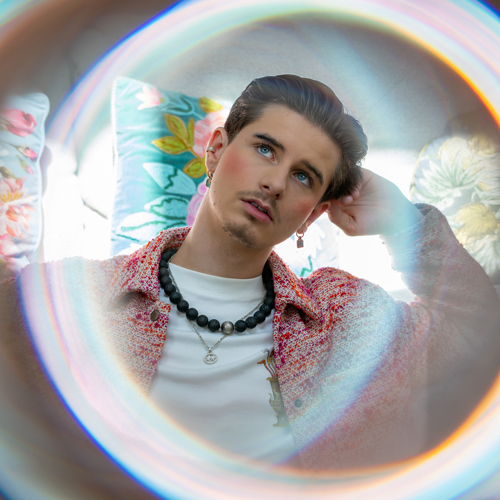
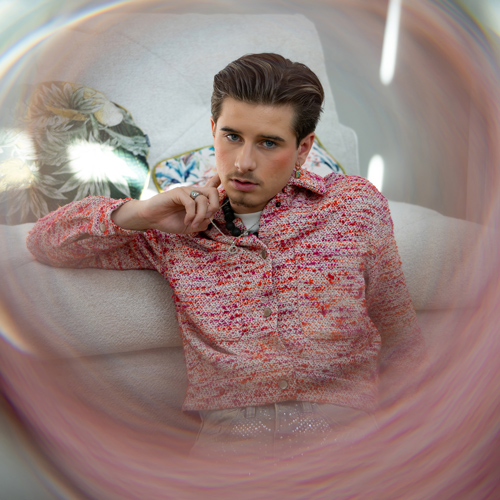
My heart belongs to both nature and wildlife photography. What fascinates me most is the ability to capture moments that would otherwise vanish in the flow of time. In wildlife photography, these are often fleeting expressions – curiosity, joy, or fear – that you don’t even realize you’ve captured until you look at the files later. Each tiny detail tells a story, and this element of surprise is endlessly inspiring. Landscape photography, by contrast, unfolds more slowly but is equally powerful. Light plays the starring role – for example, during an alpine sunset when the mountains shift from gold to purple in just a few minutes. Capturing this transformation is a way of honoring the ephemeral beauty of nature. I also love photographing people, especially when they love themselves. That inner harmony and confidence always shine through, and my goal is to reveal their true essence rather than an artificial pose. Whether in animals, landscapes, or human beings, I am drawn to authenticity and those unrepeatable moments that speak directly to the heart.
6. What’s your go-to camera setup, and why does it work best for your projects? What’s your favorite feature?
My main camera is the Sony Alpha 7RV, which I love for its outstanding resolution and incredible detail. I complement it with the Sony Alpha 7 III, a true workhorse that delivers reliable performance across all areas. For lenses, I use a versatile mix that gives me the freedom to work across different genres. The Tamron 28–200mm is my all-rounder for travel and spontaneous shots, while the Tamron 35–150mm is perfect for portraits and shallow depth of field. For wildlife and landscapes, I rely on the Tamron 150–500mm and the Sony 200–600mm, which both provide exceptional reach and sharpness. For wide-angle and macro, I use Tamron’s 16–30mm and 90mm Macro. This setup allows me to move seamlessly between wildlife, landscapes, and portraits. What I value most is the flexibility – it enables me to respond intuitively to the fleeting moments I love to capture.
7. If someone looked at your work, what’s the one thing you’d want them to feel?
First and foremost, I want people to feel free to see and experience whatever speaks to them. We all perceive the world differently, and that diversity is part of what makes art meaningful. That said, it would mean a lot to me if viewers sensed my deep love for nature and animals in my work. Through my photography, I try to create a space where the natural world can be seen, honored, and appreciated as the wonder it truly is. These are treasures of our planet that deserve not to be destroyed, but to be protected.
8. What was the most challenging part of capturing your winning shot?
When I saw the moon resting on the mountains, I almost panicked. I knew I had no more than five minutes before it moved on, so I hurriedly grabbed my camera and rushed to attach the telephoto lens. It was a race against time, and for a moment I feared I would miss it altogether. Luckily, I managed to capture that fleeting constellation just before it disappeared.
9. Is there a specific place or subject that inspires you the most?
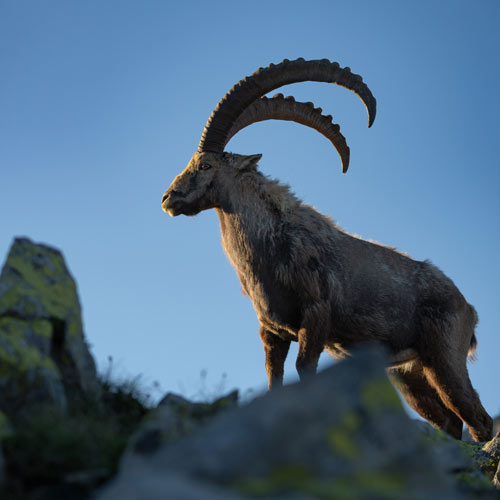
Wild animals inspire me the most. You can see their moods, needs, and even their joy directly in their expressions – and that, in turn, makes me happy. Among them, ibexes are my favorite subjects. They are majestic, almost meditative creatures, and when I sit quietly, they sometimes approach me as if they wanted to start a conversation. Those encounters are deeply special, and in those moments, they allow me to photograph them.
10. Who or what has been your biggest influence in photography?
For me, the greatest influence has always been nature itself. Photography is not only my passion but also a form of balance, meditation, and dialogue with the natural world. It is the rhythms, the silence, and the unexpected wonders of nature that continually inspire and guide my work.
11. What message would you share to inspire photographers to participate in photography awards, and what advice would you give to help them excel in the competition?
When asked, I always give the same advice: if you love photography, go out and simply do it. Learn through trial and error, and train your eye for perspective – because perspective only comes through practice, practice, practice. And when you are proud of a particular photograph, don’t hesitate to submit it to a competition. Recognition is a wonderful bonus, but the true reward is the joy of creating the image itself.
12. What’s one piece of advice for someone just starting in photography?
Go out and simply do it!
13. What role do editing and post-processing play in your creative workflow?
I do edit my photos digitally, especially when the lighting conditions are difficult – for example, during twilight in wildlife photography. However, I love natural colors and never alter them dramatically. My goal is always to preserve the authenticity of the moment.
14. How do you see technology, like AI, influencing the future of photography and your own approach?
I don’t demonize AI the way some of my colleagues do. I love natural photography, but I also find it fantastic that AI can, for example, reduce noise in very dark images taken at high ISO. That’s a wonderful technical possibility and a tool that, when used responsibly, can truly support the art of photography.
15. If you could photograph anything or anyone in the world, what would it be?
This year, I had the chance to photograph wild grizzly bears in the Yukon, and it was one of the most beautiful moments of my life. I would love to spend a few months doing just that in Alaska and Canada. Unfortunately, I don’t have that much vacation time – or the budget, haha!