Amnish Kumar
1. Congratulations on winning in the Global Photography Awards! Can you share a little about yourself, what inspired you to pursue photography, and how has your journey evolved since your first shot?
My journey in photography began when I was a young boy growing up in Punjab, India. I was fascinated by the way a photograph could freeze a moment and preserve an emotion forever. What started as a passion gradually became my profession and, over the years, photography has become a major part of who I am. I built my career through weddings and human stories, traveling across the UK and internationally to capture people, cultures and emotions. With every wedding and every photograph, I have learned something new about light, composition, storytelling and, most importantly, people. Today, I’m proud to have built Sharpshooter Photography into an international wedding photography brand. Winning a Global Photography Award is a very special moment in that journey because it represents years of learning, hard work, creativity and the belief that there is always more to discover behind the camera.
2. Can you share the story or inspiration behind your award-winning piece? How does winning this award make you feel about your journey in photography?
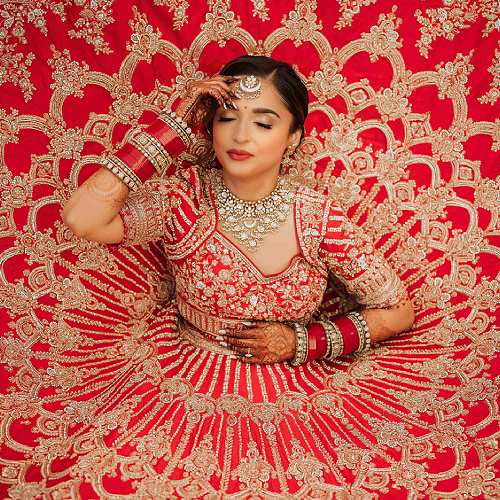
My award-winning photograph, “Regal Grace,” was created from a moment where elegance, emotion and visual storytelling came together naturally. What attracted me to the image was not simply the beauty of the subject, but the feeling within the frame. I wanted the photograph to have a sense of presence and timelessness — something that would make the viewer pause rather than simply look and move on. For me, photography has always been about more than creating a technically perfect image. It is about creating something that makes people feel something. That is what I tried to achieve with this photograph. Receiving a Gold Award from the Global Photography Awards is incredibly meaningful to me. I have spent many years working behind the scenes, constantly learning and pushing myself creatively. To have one of my images recognized internationally is a proud moment and a reminder of how far the journey has taken me.
3. How do you decide which photo to submit for a competition?
I don’t choose an image simply because it is technically perfect or because it looks impressive at first glance. I look for something that has emotion, character and a story. When I review an image, I ask myself whether it makes me stop and look at it again. Does it communicate something without needing an explanation? Does the composition, light and moment work together? Most importantly, does the photograph feel like my work? I also try not to create photographs specifically for competitions. My favorite images are often created while doing the work I love — capturing real people, real emotions and genuine moments. If an image continues to speak to me after the wedding or shoot is finished, that is when I consider entering it. I think a strong competition photograph should not only show technical ability; it should give the viewer a reason to feel something.
4. What first made you pick up a camera?
I first picked up a camera because I was fascinated by the idea of preserving a moment forever. Growing up in Punjab, I was always drawn to people, celebrations and the emotions around them. Photography gave me a way to capture those moments and tell stories through a single image. What started as curiosity gradually became a passion, and that passion eventually became my profession.
5. What’s your favorite type of photography, and why do you love it?
Wedding photography will always be my favorite. I love working with real people and real emotions — the excitement, the nervousness, the laughter, the tears and all the little moments in between. Every wedding is different, and that is what keeps it exciting for me. I’m not just taking photographs; I’m creating memories that people will look back on for generations.
6. What’s your go-to camera setup, and why does it work best for your projects? What’s your favorite feature?
My go-to setup is the Canon R5, paired with professional RF lenses such as the 15–35mm f/2.8, 24–70mm f/2.8, 50mm f/1.2, 85mm f/1.2 and 70–200mm f/2.8. For weddings, I need equipment that allows me to move quickly between different situations — from wide environmental portraits and busy celebrations to intimate emotional moments. The R5 gives me the resolution, autofocus performance and flexibility I need to work confidently throughout a wedding day. My favorite feature is the autofocus and subject tracking. Weddings move incredibly quickly, so being able to lock onto a subject and concentrate on the moment rather than constantly worrying about focus makes a huge difference
7. If someone looked at your work, what’s the one thing you’d want them to feel?
I want people to feel something real. Whether it’s love, happiness, excitement or even nostalgia, I want my photographs to take them back to the moment and make them feel as though they are there again.
8. What was the most challenging part of capturing your winning shot?
The biggest challenge was finding the right balance between the subject, the light and the overall composition. I wanted the image to feel natural and powerful without overcomplicating it. There was only a small window where everything came together perfectly, so I had to trust my instincts, react quickly and capture the moment when it felt right.
9. Is there a specific place or subject that inspires you the most?
People inspire me the most. Every person has a different story, and I love finding ways to show that personality through an image. I’m also inspired by different cultures and places, particularly India. The colors, traditions, architecture and emotions surrounding celebrations give me endless opportunities to create something visually powerful while still keeping the human story at the heart of the photograph.
10. Who or what has been your biggest influence in photography?
My biggest influence has been the people and experiences around me. I’ve always believed that photography is about understanding people, emotions and stories rather than simply taking a beautiful picture. My journey from Punjab to building an international wedding photography business has taught me to keep learning, stay curious and never stop challenging myself creatively. Every wedding, every couple and every place I photograph has influenced the way I see photography today.
11. What message would you share to inspire photographers to participate in photography awards, and what advice would you give to help them excel in the competition?
I would encourage every photographer to enter awards, not simply for recognition, but as a way of challenging themselves and seeing their work from a different perspective. My advice is to be selective. Don’t submit an image just because it is technically perfect. Look for an image that has emotion, a strong story and your own creative identity. Study the image carefully, pay attention to composition and light, and most importantly, stay true to your own style. Don’t be afraid of rejection either. Every competition is an opportunity to learn, improve and come back stronger.
12. What’s one piece of advice for someone just starting in photography?
Learn your camera, understand light, practice as much as possible and don’t be afraid to make mistakes. The biggest growth comes from experience. Most importantly, enjoy the journey — photography is not just about the camera you hold, but about how you see the world through it.
13. What role do editing and post-processing play in your creative workflow?
Editing is an important part of my creative process, but I always believe it should enhance the photograph rather than change the story. I start by getting as much as possible right in-camera — the composition, lighting, exposure and moment. In post-production, I then refine the colours, tones, contrast and details to create the final look I had in mind when I captured the image. For me, consistency is also important, especially when photographing weddings. I want a complete collection of images to feel cohesive while still allowing each individual photograph to have its own character.
14. How do you see technology, like AI, influencing the future of photography and your own approach?
Technology and AI are going to have a significant influence on photography, particularly in areas such as editing, workflow and image organization. I see these tools as something that can support photographers and give us more time to concentrate on creativity and people. At the same time, I believe the most important part of photography cannot be replaced — the ability to recognize a genuine moment, understand emotion and make a creative decision at exactly the right time. I’m happy to embrace new technology, but I want to use it as a tool rather than allow it to replace the human element that makes photography meaningful.
15. If you could photograph anything or anyone in the world, what would it be?
I would love to photograph a truly significant human story — something where photography could capture not just how someone looks, but who they are and what they have experienced. I would also love to photograph different cultures around the world, especially places where traditions and everyday life create powerful visual stories. For me, the opportunity to travel, meet people and document something that may otherwise only exist in someone’s memories would be incredibly meaningful.