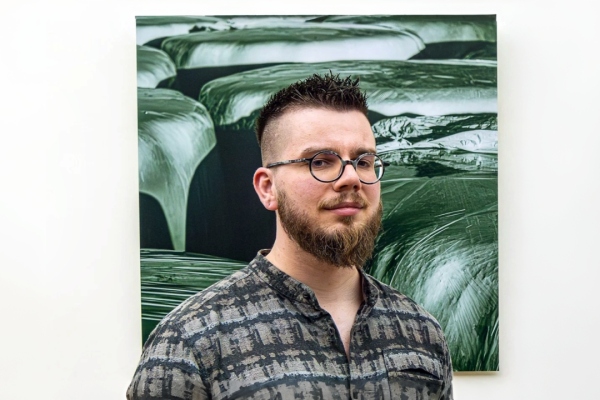
Marcel van Beek
1. Congratulations on winning in the Global Photography Awards! Can you share a little about yourself, what inspired you to pursue photography, and how has your journey evolved since your first shot?
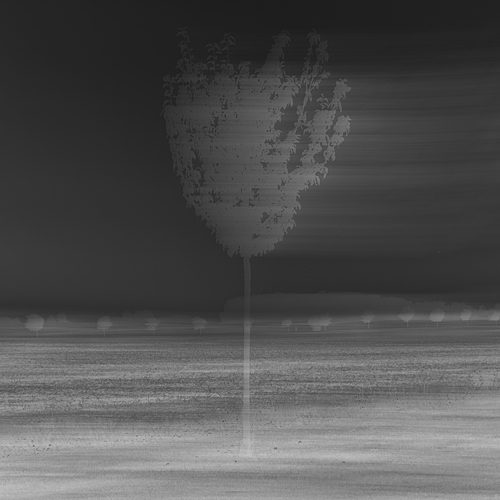
I am a visual artist based in Germany, with an academic background in painting and fine art photography. Painting still influences the way I construct an image - through rhythm, surface, balance and atmosphere - but photography opened a different path for me. It brought chance, movement and direct encounter into the work. Instead of beginning with an empty canvas, I could respond to something already present in the world and discover how far it might be transformed through attention and framing. Over time, my photography has become more conceptual and more concentrated. I am increasingly interested in unstable states: water that appears solid, landscapes that begin to dissolve, architectural spaces that become psychological, or familiar forms that suddenly feel strange. The journey has therefore been less about settling into one subject than about developing a visual language capable of moving between observation, abstraction and inner experience.
2. Can you share the story or inspiration behind your award-winning piece? How does winning this award make you feel about your journey in photography?
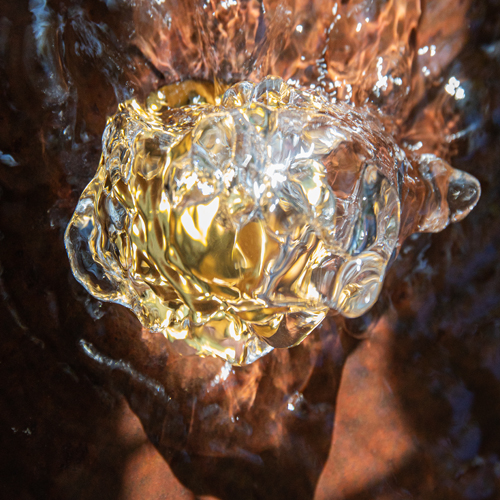
The work I would single out from this year's awards is the series “Glass from Stone”. It began with spring water emerging directly from rock. In continuous movement, the water is almost impossible to grasp; in a photograph, however, a fraction of a second can make it appear solid, crystalline or sculptural. I became fascinated by that contradiction between stone, which suggests permanence, and water, which never holds a fixed form. Each image preserves a body that exists only once and is immediately abandoned by the flow. The recognition is especially meaningful because the series grew from a very modest observation rather than from a spectacular subject. It confirms something important to me: transformation does not have to be invented. Sometimes it is already taking place in front of us, and photography can reveal it by changing the scale of our attention. Receiving an award for this work encourages me to continue trusting those quiet, material encounters.
3. How do you decide which photo to submit for a competition?
I begin with the work itself, not with the hope of predicting a jury. I ask whether an image or series has a clear internal necessity: does the form support the idea, does it remain compelling after repeated viewing, and does it add something distinctive to my wider practice? Only then do I consider the context of the competition and whether the category creates a productive frame for the work. I prefer a slightly unexpected but defensible fit to submitting an image simply because it resembles previous winners.
4. What first made you pick up a camera?
The camera first attracted me because it altered my relationship to looking. Painting had taught me to build an image slowly; photography taught me to recognize one quickly. I enjoyed the physical act of moving through a place, noticing something that might last only seconds, and making a decision before it disappeared. That mixture of receptiveness and precision felt very different from the studio, and very liberating. What kept me photographing was the discovery that the camera does not merely record. Through framing, timing, distance and exposure, a familiar thing can lose its ordinary function and become something else: a sign, a surface, a body, a threshold. That possibility of transformation became central to my practice and still motivates me today.
5. What’s your favorite type of photography, and why do you love it?
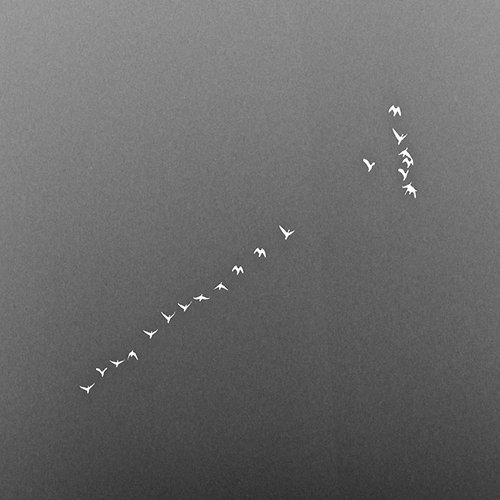
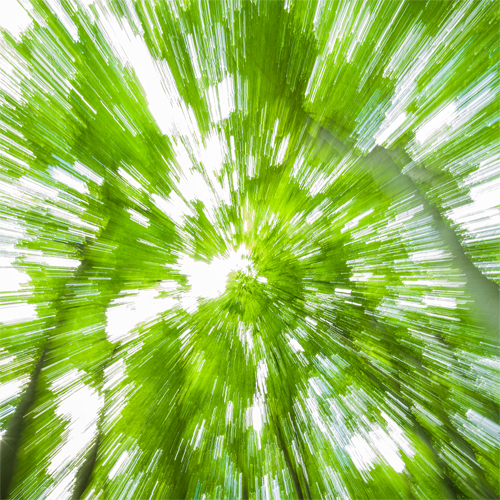
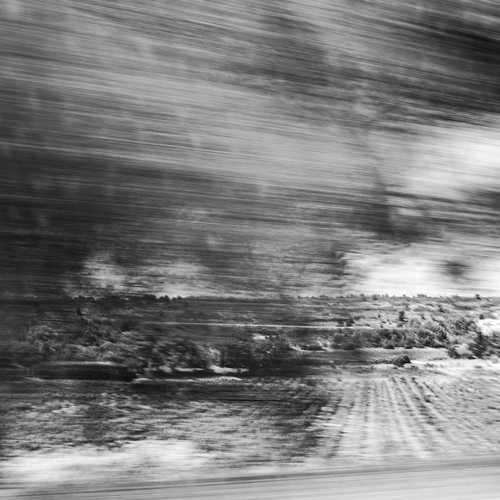
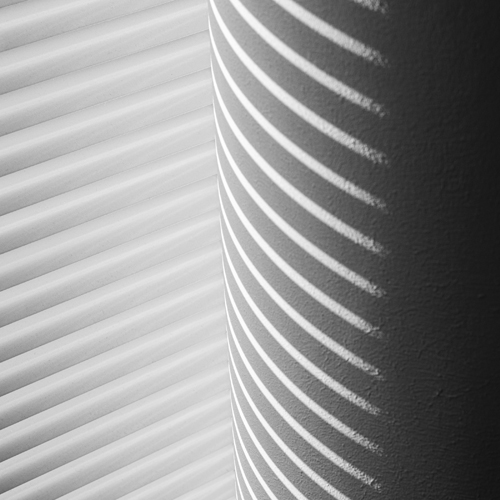
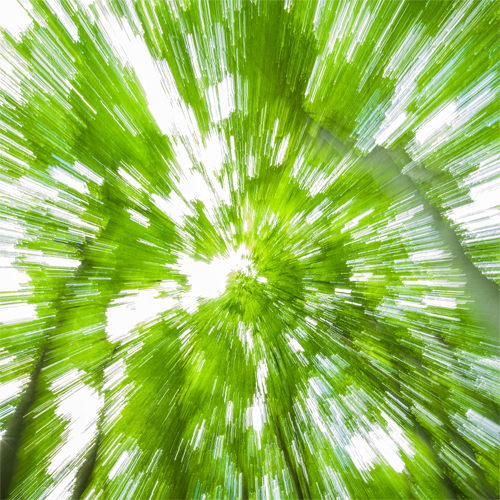
I feel closest to fine art photography when it remains open to conceptual thinking. I like photographs that begin with the visible world but are not exhausted by description. A source of water can become a temporary sculpture, a forest can become a psychological space, and infrastructure can become a way of thinking about society. Photography gives me the freedom to move between these registers without having to separate the documentary from the imaginative too sharply. I am especially drawn to ambiguity. I do not want an image to surrender all of its meaning immediately. Reduction, inversion, close framing or monochrome can remove familiar cues and create a productive hesitation: the viewer recognizes something, but not completely. That moment of uncertainty is often where the work begins for me.
6. What’s your go-to camera setup, and why does it work best for your projects? What’s your favorite feature?
My working setup is intentionally light and uncomplicated. I prefer to stay mobile and responsive rather than build situations around the camera. Most of my photographs arise from encounters with existing light, materials and spaces, so I need equipment that lets me react quickly without interrupting that attention. The feature I value most is therefore not a particular technical specification but the discipline of the single in-camera exposure. I do not construct scenes from multiple elements. The decisive act remains the moment of seeing and exposing. Post-processing may later refine tone, color or orientation, but the visual event itself has to exist in front of the camera.
7. If someone looked at your work, what’s the one thing you’d want them to feel?
I would like viewers to experience a brief uncertainty about what they are seeing - not confusion for its own sake, but a sense that the familiar has shifted slightly. Ideally, the image first attracts through form or atmosphere and then opens into something less settled: fragility, desire, ecological tension, memory, or the feeling that a place or object carries more than one possible meaning. For me, that second look is important. I am not trying to provide a message that can be decoded in one sentence. I would rather create an image that stays mentally active after it has been seen, because beauty and unease, recognition and estrangement, can coexist within it.
8. What was the most challenging part of capturing your winning shot?
With "Glass from Stone", the greatest challenge was that the subject never repeated itself. The forms were created by moving spring water, pressure, light and the irregular surface of the rock; a fraction of a second later, they were gone. I had to watch continuously and respond to structures that were only just becoming visible. The camera freezes them into something apparently solid, but that solidity is an illusion produced by timing. The challenge continued in the edit. Many exposures contained interesting water formations, but only a few crossed the threshold from description into presence - where the flow began to resemble an artefact, a body or an apparition without losing its material origin. Selecting those images was as important as taking them, because the series depends on maintaining that tension between natural process and imagined form.
9. Is there a specific place or subject that inspires you the most?
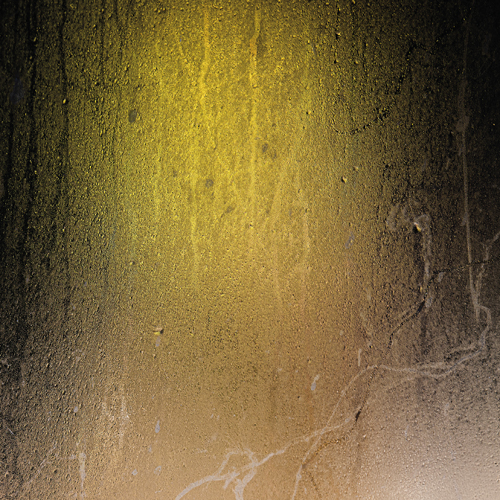
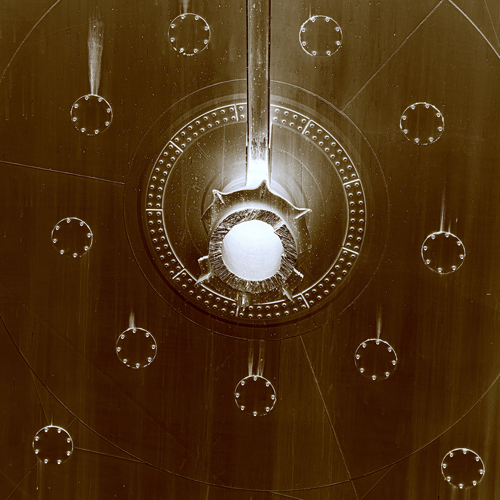
I am less attached to one particular place than to certain kinds of situations. Sources, forests, industrial landscapes, water, thresholds and transitional urban spaces all attract me because they are physically real yet open to transformation. I tend to return to places where different forces meet: solid and liquid, natural and constructed, protected and exposed, permanent and temporary. That is probably why I am often drawn to margins rather than landmarks. A small pool of condensation, a damaged tree, an underpass or a piece of energy infrastructure can become as significant to me as a dramatic landscape. What matters is whether the subject begins to exceed its immediate function and offers another way of seeing it.
10. Who or what has been your biggest influence in photography?
My visual imagination was formed as much by painting as by photography. Romanticism and Symbolism remain important because they allow landscape, darkness and material form to carry psychological meaning. I am also drawn to artists such as Zdzislaw Beksinski, whose images inhabit a territory between physical reality, dream and unease. In photography, I admire the restraint and tonal intelligence of Josef Sudek and Mimmo Jodice, and the precise, enigmatic quality of Issei Suda. What connects these very different influences for me is their ability to make ordinary reality feel charged without explaining it away. That balance between exact observation and mystery is something I continue to pursue.
11. What message would you share to inspire photographers to participate in photography awards, and what advice would you give to help them excel in the competition?
Awards can be useful because they introduce an external moment of decision into a practice that is otherwise very private. Preparing a submission forces you to edit hard, define what a body of work is actually about, and judge whether individual images can carry that idea beyond the context in which they were made. That discipline alone can be valuable, regardless of the result. At the same time, I would not recommend chasing juries or trends. A competition is most useful when it sharpens your own criteria rather than replacing them. Submit work you would still believe in if it received no award, and make sure the selection says something recognizably your own.
12. What’s one piece of advice for someone just starting in photography?
Learn to return to things. A strong photographic practice does not always come from traveling further or finding ever more spectacular subjects; it often comes from looking at the same kinds of places, materials or situations until you begin to notice what others pass over. Curiosity becomes more productive when it is sustained. I would also learn editing early. Taking photographs is only one part of becoming a photographer. Understanding why one image has greater necessity than another - and being willing to leave good images out - is one of the most important ways of discovering your own visual language.
13. What role do editing and post-processing play in your creative workflow?
Editing is where the initial encounter becomes a finished work. I use post-processing to clarify what was already latent in the exposure: tonal relationships, color tension, density, spatial ambiguity or, in some cases, inversion. It is not a matter of repairing an unsuccessful photograph but of deciding what kind of image the photograph wants to become. Sequencing is equally important. In a series, meaning is created not only inside each frame but between frames - through repetition, interruption, progression and contrast. I do not add, remove or composite pictorial elements; the transformation remains grounded in a single exposure. But the later edit allows me to distil the encounter until the conceptual and visual structure become inseparable.
14. How do you see technology, like AI, influencing the future of photography and your own approach?
AI will undoubtedly expand the field of image-making, but I think it will also make questions of origin, process and authorship more visible. For my own work, the physical encounter remains essential: being in a place, responding to actual light and matter, and accepting the unpredictability of what is there. That indexical connection to the world is not a limitation I want to overcome; it is part of the meaning of the work. New technologies may influence how images circulate and are interpreted, but they also make transparency about process increasingly important.
15. If you could photograph anything or anyone in the world, what would it be?
I would like to spend time photographing places where geology is visibly active - volcanic terrain, flowing lava, mineral springs, ice or other environments in which matter is clearly in transition. I am fascinated by moments when the earth seems less like a stable backdrop and more like an ongoing process. That interest connects directly to what I already photograph on a smaller scale. Glass from Stone, for example, began with water changing shape against rock. A volcanic landscape would magnify the same fascination: solidity becoming fluid, creation and destruction occurring together, and time becoming visible through matter. I suspect I would still be looking for intimate forms within the spectacle rather than simply photographing the spectacle itself.